
Running a Sex Offender Check in Bergen County
The official starting point is the free New Jersey Sex Offender Internet Registry. It is maintained by the New Jersey State Police (NJSP) through the State Bureau of Identification. No account or per-search fee is required. Searchers can work from a name or location, then narrow the place to Bergen County, a municipality, or a ZIP code. Results are meant for personal, family, neighborhood, and community safety.
The public portal is only one part of the system. It is not a complete criminal-history database and does not replace police help. An immediate threat belongs with 911. Suspected failure to register, an address that seems wrong, or another non-urgent local concern should go to the police department that serves that Bergen County municipality.
Bergen County Offender Registration Chain
A Bergen County registration begins with the police department for the municipality where the person lives. That agency receives updates, checks the supplied facts, and sends the registration material to the Bergen County Prosecutor's Office (BCPO). The prosecutor applies New Jersey's risk factors and Attorney General Guidelines, assigns a risk tier, and carries out the required notification process after judicial review. NJSP then maintains the central registry and decides which eligible submission appears online.
The flow is direct: local PD → BCPO → NJSP. A municipal police department may hold registration material without offering its own public list. An official records decision supports directing the public to the central state registry instead of making a special local list. No official Bergen-only registry, sheriff registry app, or verified local email alert service was found in the research.
Searching the New Jersey Sex Offender Internet Registry
Use only controls shown on the live NJSP page. The application is client-rendered, and exact labels or distance choices can change. The verified modes include name and location searches, with geographic filters for a city, ZIP code, or county. Do not assume a first-name box, a mile value, or a sort tool exists until it appears on the current screen.
- Open the official NJSP registry and read its conditions and misuse warning.
- Choose a name or location search. Enter only the facts already known.
- Narrow the location to Bergen County, the relevant city, or ZIP code where the live controls allow it.
- Compare the result details carefully, then read the full eligible public profile without contacting the listed person.
| Field or Control | Type | Required | Use |
|---|---|---|---|
| Name | Name input | Unspecified | Locates a registrant by name; confirm whether the current form separates name parts. |
| Address / Location | Text input | Unspecified | Centers a geographic search on a supplied place. |
| City | Text or selection | Optional | Narrows the search to a municipality such as Hackensack, Fort Lee, or Fair Lawn. |
| ZIP Code | Text | Optional | Narrows results by ZIP code. |
| County | Dropdown | Optional | Select Bergen for a county-level search. |
| Radius / Distance | Dropdown | Optional | Supports a geographic search; confirm current mile choices on the live portal. |
| Search | Button | Not applicable | Runs the chosen name or location query. |
| Map / List | View controls | Not applicable | Presents geographic or listed results when offered by the live page. |
If the search does not locate the expected public record, check the spelling and place filters. Then use the local reporting chain for a suspected error rather than guessing from the blank screen.
Bergen County Registry No-Hit Limits
A no-hit is not an all-clear. Tier 1 information ordinarily stays within law enforcement notification channels. State law also excludes specified moderate-risk Tier 2 records from Internet publication. Those exclusions can cover certain juvenile adjudications, intrafamilial matters, and some cases involving a consenting victim when the statute's conditions apply. Therefore, an empty Bergen County result does not prove that no registrant exists or that no one is registered near the searched address.
The registry also depends on reports moving through local police, the prosecutor, and NJSP. A profile's address and status reflect the most recent data reported to law enforcement. The useful conclusion is narrow: the chosen query did not return a public Internet record at that time. It is not proof about the full law-enforcement registry.
Official New Jersey Megan's Law guidance explains the notification system and publication limits.
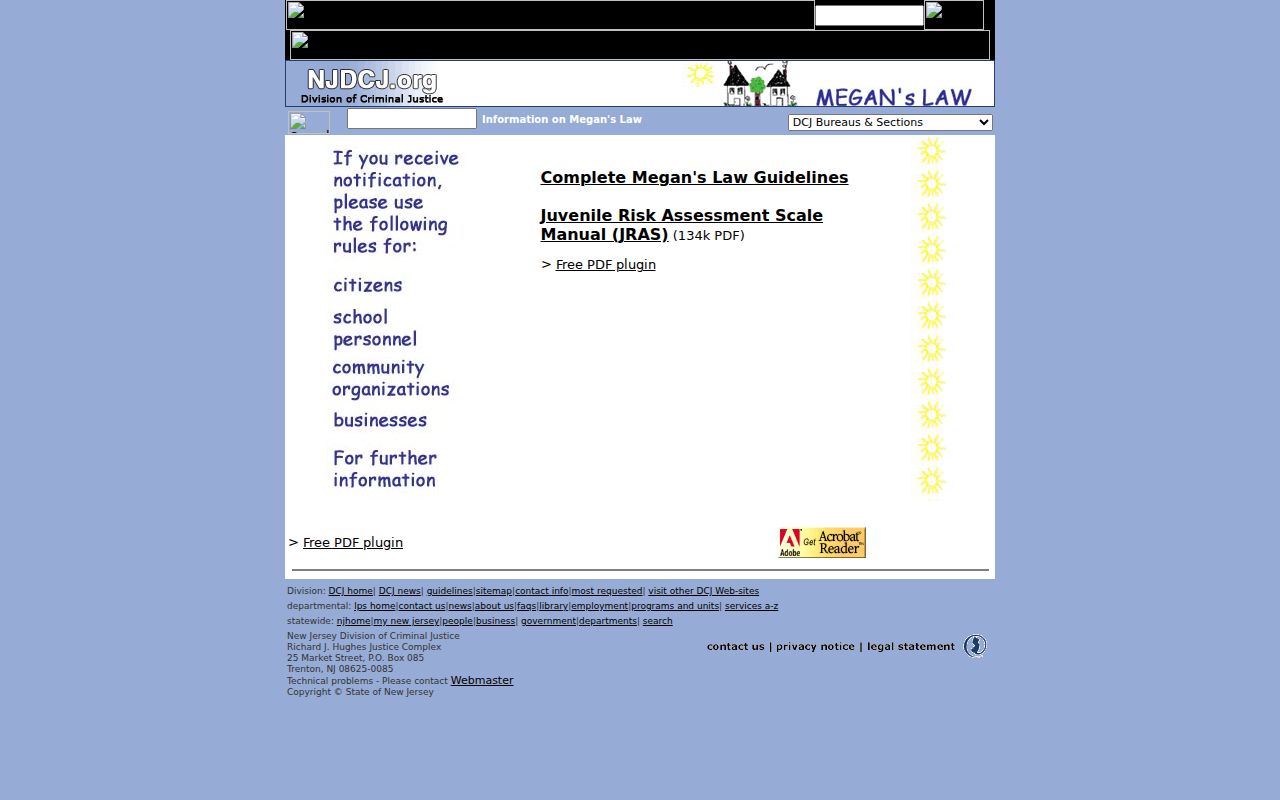
The guidance helps place an online result, or the lack of one, within New Jersey's wider risk and notice process.
What a Registry Profile Shows
An eligible public profile can combine identity, appearance, location, offense, and registration data. The exact display varies. NJSP may draw the photograph from the official identification system, while local agencies supply and verify registration facts. No single row should be read alone. Match several identifiers, and remember that an address or status may await an agency update.
| Name and aliases | Primary name and known alternate names used to distinguish records. |
|---|---|
| Photo and description | Official photograph plus sex, race, age or birth data, height, weight, hair, eyes, and listed marks when published. |
| Registered location | Residential address or other location detail approved for public display. |
| Offense information | Offense description, statutory basis, and conviction or adjudication information. |
| Risk information | Classification or notification basis when the current public portal displays it. |
| Registration status | Compliance or reporting information current as supplied to law enforcement. |
Registration forms may collect school, work, and vehicle facts, but the research did not confirm that each item appears on every current public profile. Do not infer an unshown fact.
Bergen County Offender Checks Across Borders
Bergen County sits beside New York, so a place-based safety search may need a cross-state layer. The Dru Sjodin National Sex Offender Public Website gathers participating jurisdictions in one official federal search. It is a useful fallback when a name or location may cross state lines. It does not replace the NJSP source for New Jersey details, publication rules, or corrections.
The official NSOPW national registry search offers a broader geographic starting point.
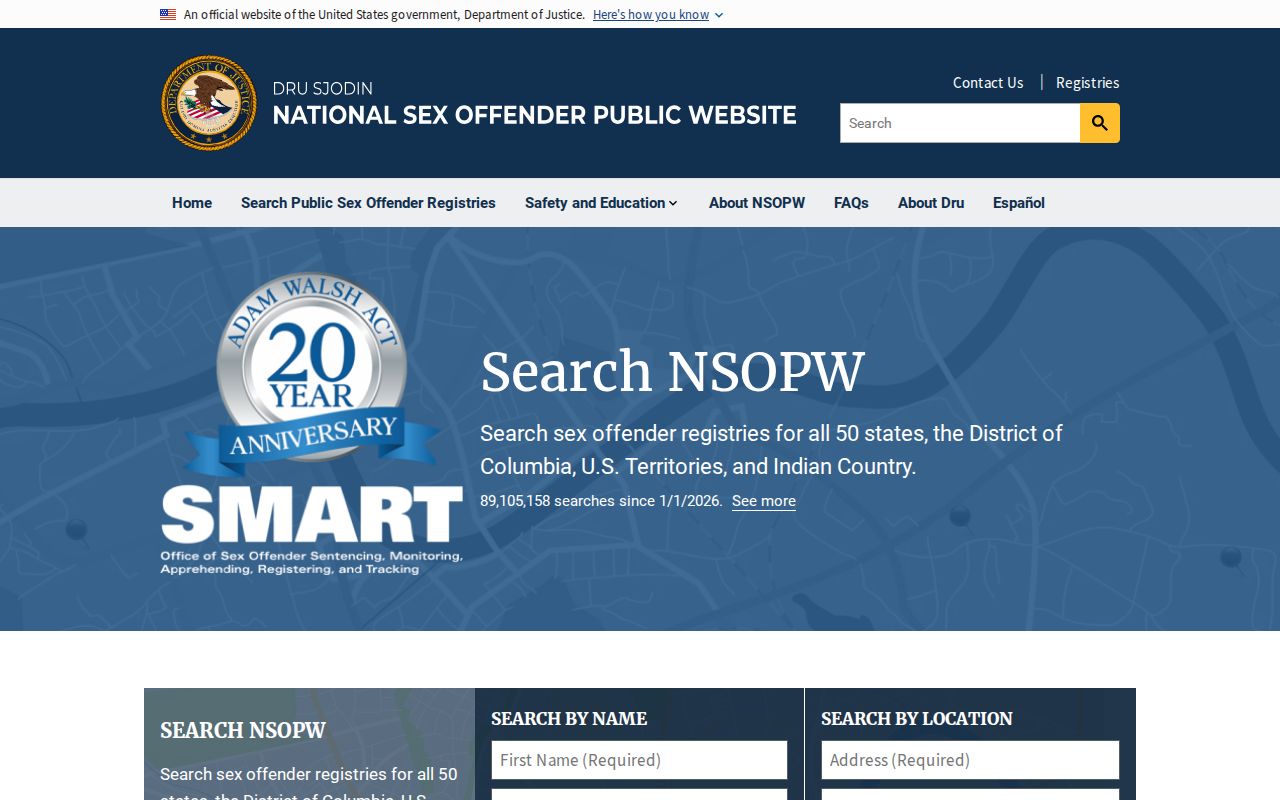
Return to NJSP for the state record, then contact the relevant local police department when a Bergen County location or status appears inaccurate.
Registration Requirements and Levels in New Jersey
New Jersey classifies risk of reoffense. It does not use a simple federal-style table in which each tier automatically lasts a set number of years. The Bergen County Prosecutor applies the statutory factors and the Registrant Risk Assessment Scale. A court reviews the classification before community notice. The tier mainly controls who receives notice and whether the record is ordinarily visible online.
| New Jersey Tier | Risk Assessment | Notice and Internet Visibility | Duration |
|---|---|---|---|
| Tier 1 | Low risk | Law enforcement is notified; the record ordinarily is not on the public Internet registry. | Generally lifetime registration unless legal relief applies; the tier does not set a short term. |
| Tier 2 | Moderate risk | Law enforcement and likely-to-encounter schools, licensed day care centers, summer camps, and registered community groups receive notice. Most records are online, subject to statutory exclusions. | Generally lifetime registration unless legal relief applies; not a fixed federal duration. |
| Tier 3 | High risk | Tier 2 recipients and members of the public likely to encounter the person receive notice. The record appears on the public Internet registry. | Generally lifetime registration unless legal relief applies; the tier itself does not end registration. |
Notification is targeted, not a license for broad private action. Tier 2 notice reaches qualifying organizations likely to encounter the person. Tier 3 adds members of the public likely to have contact.
Bergen County Registry Termination Petitions
Registration is generally for life unless a statute or court order provides relief. New Jersey law has historically allowed some people to apply to Superior Court after 15 years from conviction or release from a correctional facility, whichever is later. The applicant must have committed no offense during the following 15 years and must show they are not likely to threaten the safety of others.
This is a petition, not an automatic end date. Some offenses and registrant categories are not eligible. Current statutory text and case law control each filing. Risk tier alone does not make a Bergen County registration expire, and “Tier 1 lasts 15 years” is not an accurate statement of New Jersey law.
Correcting Bergen County Registry Information
Start with the police department for the Bergen County municipality tied to the questioned location. Give the agency a clear description of the possible error or suspected noncompliance. Local police collect and verify registration facts. The Bergen County Prosecutor's Office handles county risk classification and community notice, while NJSP manages the central system and Internet publication.
That chain helps route the issue to the office that can act. Police generally cannot reveal nonpublic registration facts or confirm that a specific unlisted person is registered. Report a concern rather than trying to investigate, follow, confront, or publicize a person. Call 911 for an immediate threat.
Lawful Use and Community Notification
Megan's Law registry information supports informed safety choices. It does not authorize contact, surveillance, threats, retaliation, exclusion, or private enforcement. Community notification follows the risk level, likely contact, statutory publication limits, and judicial review. When conduct seems unsafe or a registration duty may have been breached, preserve the facts and contact law enforcement.
Registry misuse is a crime: N.J.S.A. 2C:7-14 requires a warning against threats, intimidation, harassment, and other misuse. Under N.J.S.A. 2C:7-16, using registry information to commit a crime is a third-degree crime, while using it to commit a disorderly-persons or petty-disorderly-persons offense is itself a disorderly-persons offense.
The safe rule is simple. Use a Bergen County offender search for awareness, check official sources, and let police handle possible violations.