
How to Check Criminal History in Fort Lee
A good Fort Lee record check begins with the document, not just a person's name. A police incident or arrest report belongs to the agency that created it. A disorderly-persons complaint, DWI, traffic ticket, parking matter, or borough ordinance case belongs to Fort Lee Municipal Court. An indictable charge proceeds toward Bergen Superior Court, and a detained person may be processed at the Bergen County jail.
- Identify whether Fort Lee Police, Port Authority Police, or another agency handled the event.
- Ask the creating police records unit for the incident, arrest, crash, CAD, audio, or video record by date and report number.
- Use Municipal Court Case Search or NJMCDirect for a Fort Lee ticket or complaint, allowing time for a new ticket to enter the system.
- Follow indictable charges to Bergen Superior Court and current county custody to the Bergen County Sheriff.
- Use New Jersey State Police fingerprint channels to review your own statewide criminal history when a city record alone is too narrow.
Keep each request focused. A date, location, incident number, complaint number, or ticket number helps the clerk locate an existing record. Asking an office to answer a broad question can fail because OPRA grants access to records that exist; it does not require the custodian to conduct new research or create a report.
Fort Lee Records in a Dense Borough
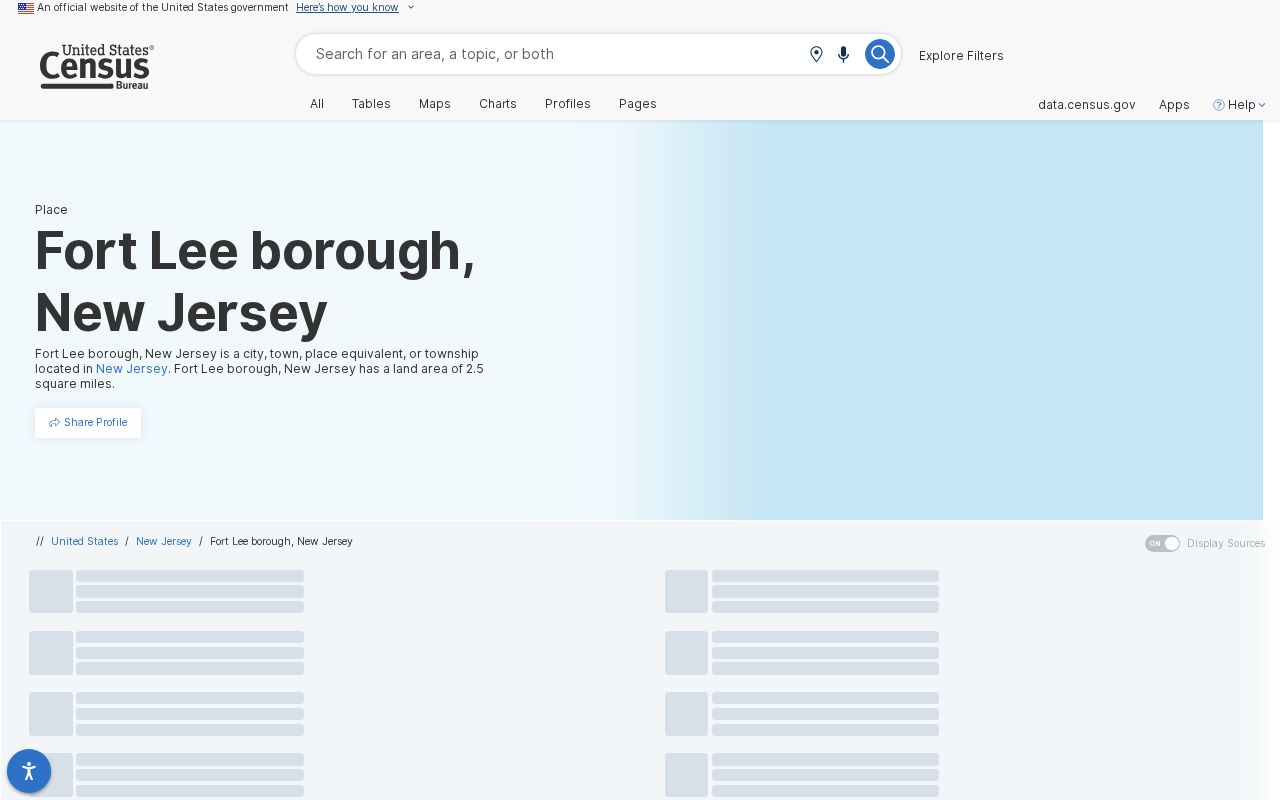
The official Census profile for Fort Lee reports 40,191 residents in 2020 within about 2.5 square miles. That dense Hudson Palisades setting sits beside the George Washington Bridge, where borough, county, state, and Port Authority roles can meet.
The local lesson is practical. Geography alone does not prove that FLPD holds a record. A borough street event may produce a Fort Lee police report and municipal complaint. A bridge or Port Authority property event may produce a Port Authority Police record. County detention adds a Bergen jail entry, while an indictable prosecution creates a Superior Court file. Each system can describe the same event from a different angle.
The Fort Lee Police Department
The Fort Lee Police Department holds the reports its officers create. The nonemergency number is 201-592-3700, and the Police Records Bureau can be reached directly at 201-592-3531. The public counter is at 309 Main Street, Fort Lee, NJ 07024. Routine report pickup and a formal OPRA request serve different needs.
Ask the Records Bureau about an identifiable motor-vehicle accident or incident report. Use Fort Lee's fillable OPRA form for an arrest or incident record, CAD or dispatch material, audio, or video that is not available through routine pickup. State the date, location, incident or report number, and precise record type. Fort Lee's form includes a police motor-vehicle category as well as choices for access, copies, certification, and delivery.
The form also collects requester or organization name, mailing address, phone, email, and signature date. It lets the requester choose inspection, pickup, mail, or electronic access where offered. Copy and certification choices can affect the product and cost. A specific description is key: name the existing Fort Lee record rather than asking the custodian to decide what happened or compile facts from several files.
Fort Lee Police Records Bureau
309 Main Street
Fort Lee, NJ 07024
201-592-3531
Report pickup: Monday-Friday
9:00 a.m.-3:45 p.m.
Fort Lee Police Report Wait
Fort Lee's official borough website routes residents to police, court, directory, and records information. The police FAQ says a motor-vehicle accident or incident report becomes available after five business days.
Waiting through that period can save an unneeded OPRA filing. Call the Police Records Bureau before traveling if the report is time-sensitive. Once ready, routine pickup runs from 9:00 a.m. through 3:45 p.m. on weekdays. A more complex request for video, CAD, audio, or an exempt and redacted report may take a different route and should identify the desired record with enough detail for staff to find it.
Note: The five-business-day guidance applies to accident and incident report availability, not to every Fort Lee OPRA request.
Arrests and Bookings in Fort Lee
Fort Lee does not publish an official city inmate roster. FLPD creates its local arrest and incident records, but current county custody is traced through the Bergen County Sheriff and jail channels. A person detained after a Fort Lee arrest may be transported to the Bergen County Corrections and Rehabilitation Center for intake, fingerprints, a booking record, and release or detention processing.
The complaint then divides by case level. Fort Lee Municipal Court handles local disorderly-persons and petty-disorderly-persons matters, DWI, traffic, parking, and ordinances. Indictable allegations proceed into Bergen County prosecution and Superior Court. For fuller county detention detail, the Bergen County arrest and booking channels explain the inmate lookup, jail phone, records request, and court trail.
A current jail no-hit does not erase a Fort Lee arrest. The person may have been released, transferred, never admitted to the county jail, or booked under a record not visible in a current-custody tool. Return to the FLPD report and then match its complaint number to the appropriate court.
Fort Lee Bridge Record Jurisdiction
The George Washington Bridge creates an easy records mistake. An event described casually as “in Fort Lee” may have occurred on bridge or Port Authority property and been handled by Port Authority Police. In that case, an FLPD request can return no responsive record even though a law-enforcement file exists elsewhere.
Check the agency name on the ticket, complaint, crash exchange, receipt, or court notice before submitting a request. Ask FLPD for borough incidents created by its officers. Direct Port Authority Police material to the Port Authority records channel. If both agencies took part, request each agency's own record instead of assuming one custodian holds a merged file. The court complaint may help confirm the officer and agency when the first paperwork is unclear.
Fort Lee Municipal Court Records
Fort Lee's official Municipal Court page places the court at 309 Main Street in courtroom 106. The office phone is 201-592-3500 ext. 1509, and the fax is 201-585-1232. It operates Monday through Friday from 8:30 a.m. to 4:00 p.m. Court staff handle the city-level file, while police reports remain with FLPD Records.
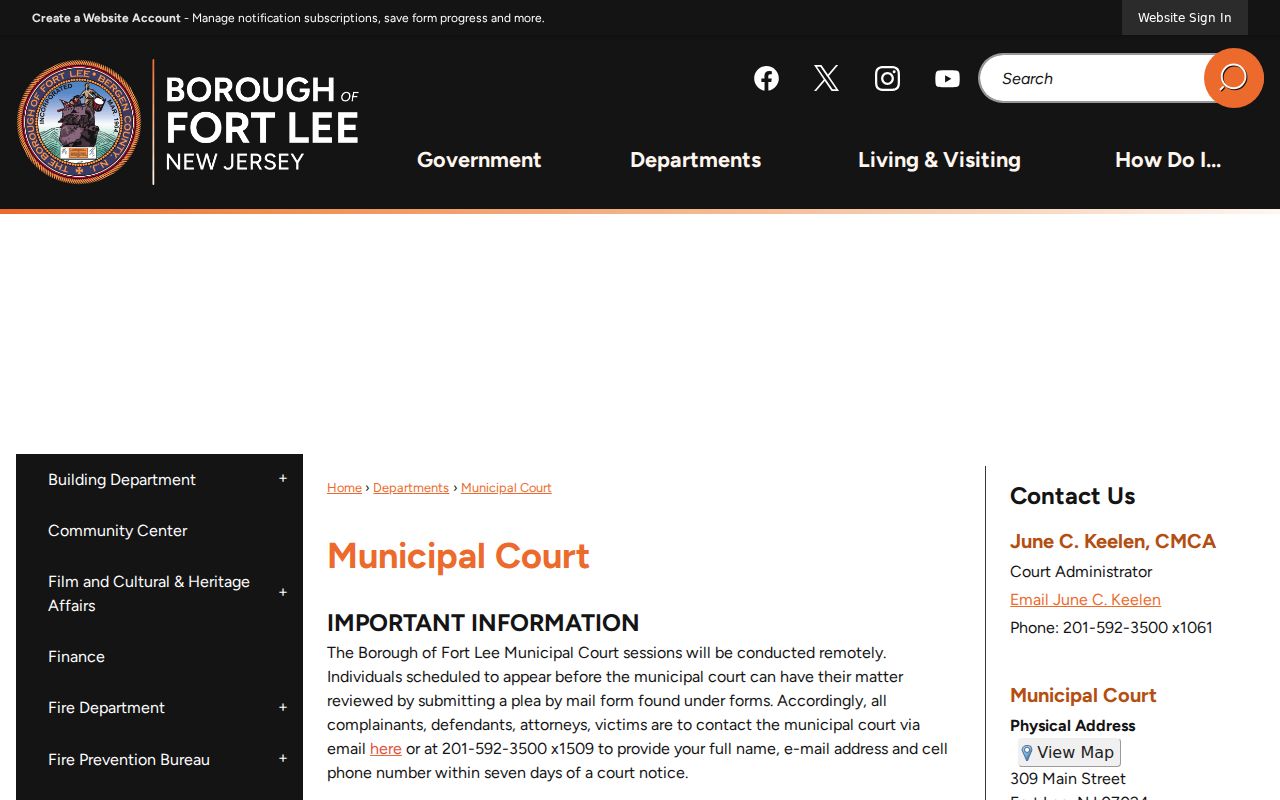
The court page is the direct source for Fort Lee session notices, clerk contacts, payment methods, and current remote-hearing instructions.
| Court Name | Fort Lee Municipal Court, courtroom 106 |
|---|---|
| Case Types Heard | Traffic, parking, ordinances, DP/PDP complaints, DWI, and preliminary events in some indictable matters |
| Case Lookup Channel | Municipal Court Case Search, NJMCDirect, the clerk, or a JEDS records request |
| Useful Identifiers | Ticket or complaint number; payment may also require court code, prefix, and license plate |
| Docket Information | Complaint, charge, scheduled event, plea, payment, and disposition data as available |
| Copies | Request from Fort Lee Municipal Court, not FLPD or Bergen Superior Court |
The municipal file can show the court outcome, but it is not the police narrative. A requester seeking both should make two inquiries: one to FLPD for the incident or arrest record and one to the court for the complaint, docket, order, or disposition.
Fort Lee Court Records Online
Fort Lee currently conducts municipal sessions remotely. After receiving a court notice, complainants, defendants, attorneys, and victims are directed to provide their full name, email address, and cell number within seven days. That contact step enables the court to distribute remote-session information and should not be confused with entering a plea or requesting the police report.
A newly issued ticket may not be searchable at once. Fort Lee asks people to wait three to five business days after receipt before calling so the ticket can be processed. A fast NJMCDirect no-hit during that window is not proof that the case does not exist. Check again after the entry period, then call the clerk with the ticket or complaint number.
The calendar places traffic sessions on the first and third Tuesdays at 5:00 p.m. and Wednesdays at 5:00 p.m. First appearances occur on the second and fourth Tuesdays at 10:00 a.m. Criminal and DWI sessions occur on the first and third Thursdays at 9:00 a.m. Confirm the current notice before relying on a date.
No Fort Lee Booking Roster
No official Fort Lee public inmate list was located. The absence makes the fallback chain more important: call the Bergen County jail for current custody, try the sheriff's official inmate lookup, ask FLPD for the local arrest report, and search the court complaint. County jail data answers present detention, not every prior Fort Lee booking.
If custody moved to state prison, use the New Jersey Department of Corrections locator rather than a city or county roster. For a brief arrest followed by release, the police and court records may be the only durable public trail. A city press item or news release is not a complete ledger and should never take the place of the originating record.
Where Fort Lee Records End Up
A Fort Lee event can generate several connected records. FLPD keeps the police report. The local court keeps municipal complaints and traffic or ordinance files. Indictable allegations move to the Bergen County Prosecutor and Superior Court. If fingerprints were taken, the arrest cycle can enter the New Jersey State Police State Bureau of Identification, and later court dispositions may update the state history.
Record flow: Fort Lee Police Department › Bergen County Courts › New Jersey State Police State Bureau of Identification
The flow is not instant or identical at each stage. An initial charge can be dismissed, downgraded, or replaced. A repository history centers on fingerprint-supported identity and arrest cycles. A court docket centers on filed charges, events, and disposition. When records disagree, use the Fort Lee report for the original event, the court file for the result, and the NJSP correction process for errors in your own state history.
Fort Lee Court Payment Records
NJMCDirect supports payment, installment payments, not-guilty pleas, and eligible municipal-prosecutor plea review. Fort Lee also offers Online Municipal Case Resolution, but a new user disputing a case must create a user ID and password. Search fields and payment fields are not interchangeable. Ticket payment may call for the court code, prefix, ticket number, and license plate even when a general case search uses other controls.
The court office accepts cash, check, money order, credit card, and debit card. It does not take payment by phone or tap-to-pay. The rear-entrance drop box accepts an envelope marked for Fort Lee Municipal Court, but cash must never be placed there. Include a self-addressed envelope when a receipt is needed. These rules can explain why a valid court record does not yet show the payment action a user expected.
Public Access Rules
Fort Lee police records and municipal court files follow different access laws. OPRA applies to identifiable borough records, subject to exemptions and redaction. Court records follow New Jersey Court Rule 1:38 and Judiciary request channels. An active investigation, juvenile identity, victim information, private identifier, sealed filing, or expunged matter may be withheld even when another part of the event is public.
Key access rules:
Open Public Records Act, N.J.S.A. 47:1A-1 et seq. gives access to existing government records unless law protects them.
New Jersey Court Rule 1:38 controls public access and redaction for municipal and Superior Court files.
N.J.S.A. 2C:52-1 et seq. isolates covered expunged records from ordinary public access while preserving statutory exceptions.
Send the request to the creator. Fort Lee Police responds for FLPD reports. Municipal Court responds for its complaint and docket. Port Authority records belong to the Port Authority, while Bergen court and jail records remain county channels. A clear denial should identify the basis for withholding, and an OPRA denial can be challenged through the Government Records Council or Superior Court.